
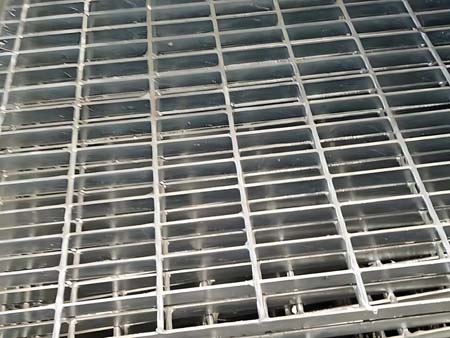
The food processing industry imposes rigorous sanitary requirements on steel gratings. Material selection serves as the primary line of defense; it is mandatory to utilize materials that comply with food-contact standards—such as 304 or 316L stainless steel—to prevent the leaching of harmful substances and ensure food safety at the source.
Surface treatment of steel gratings is of paramount importance. They must undergo processes such as polishing to achieve a surface roughness of ≤0.8μm, thereby eliminating "sanitary dead zones." This facilitates easy cleaning and disinfection, prevents the accumulation of food residues and bacterial proliferation, and is ideally suited to the frequent wash-down environments typical of food processing facilities.
Furthermore, the structural design of steel gratings must effectively balance drainage and slip resistance. A drainage slope of ≥1% is required to ensure the rapid runoff of wash water, while a friction coefficient of ≥0.8 is necessary to prevent personnel from slipping in wet environments, thereby comprehensively fortifying the sanitary defenses of food production operations.
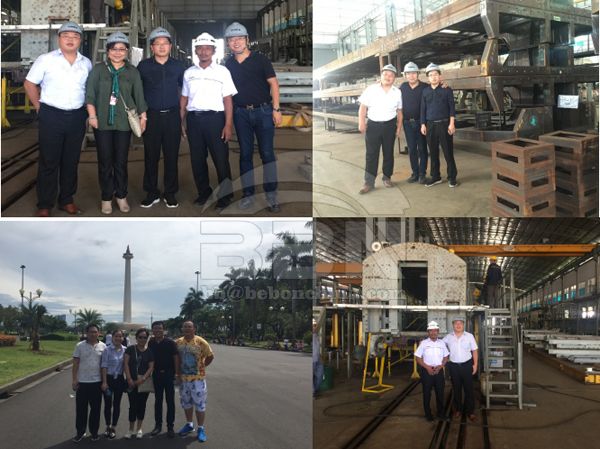
Just like you, 70% customers choose long-term cooperation with BBN steel not only for our good product and service quality, good reputation in the international market, but also for our experienced one-stop raw material supply and further steel processing!

Henan BEBON Iron&Steel co.,ltd.


 Language

 Online Consultation


