
Impact resistance cannot be defined by a single impact energy value. A131 steel is widely used for primary structural components of ship hulls because it must be capable of absorbing significant energy under dynamic loads—such as those encountered during collisions, groundings, or impacts with ice—without undergoing brittle fracture. This performance is evaluated based on three key parameters: impact energy, fracture toughness, and the yield-to-tensile ratio.
A common, yet often overlooked, trade-off exists: as material strength increases, the yield-to-tensile ratio typically rises while uniform elongation decreases, effectively reducing the material's capacity for plastic deformation. Consequently, technical specifications for ice-strengthened vessels and ships intended for polar navigation often impose an upper limit on the yield-to-tensile ratio—while still ensuring sufficient strength—and mandate a lower ductile-to-brittle transition temperature. Similar considerations apply to welded joints; the weld metal strength should be slightly higher than that of the base material to prevent plastic deformation from concentrating along the fusion line.
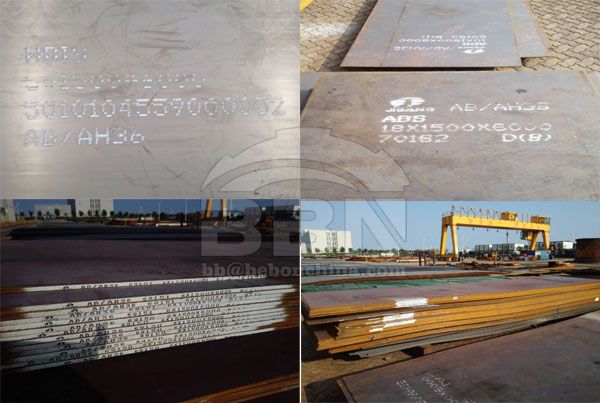
BBN Steel supplies A131 shipbuilding steel plates in Grades A, B, D, and E, as well as AH32, AH36, DH36, and EH36. Production can be tailored to specific ice-strengthening classes and design temperatures. When requesting a quote, please provide the ice class, design temperature, and plate thickness so that the appropriate steel grade and inspection requirements can be confirmed.
Just like you, 70% customers choose long-term cooperation with BBN steel not only for our good product and service quality, good reputation in the international market, but also for our experienced one-stop raw material supply and further steel processing!


Henan BEBON Iron&Steel co.,ltd.


 Language


 Online Consultation


