
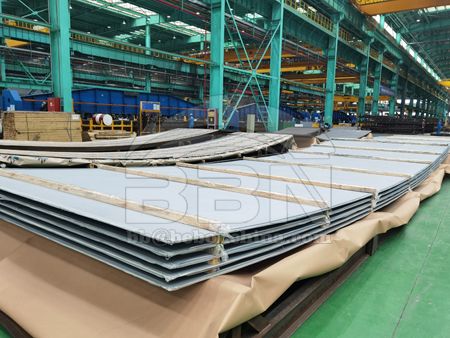
Large-diameter storage tanks represent the prevailing configuration in the modern energy storage sector; consequently, the selection of tank shell plates directly determines a tank's safety, reliability, and economic efficiency. During the design phase, the specification of API 650 tank plates is a widely accepted consensus within the global petroleum storage industry, as these plates are specifically engineered to meet the structural design requirements of large-diameter tanks.
To address the specific stress distribution characteristics inherent to large-diameter tanks, the API 650 standard recommends utilizing the variable-point method for calculating shell plate thickness. This approach allows for a precise match between the plate thickness and the specific stress demands of each individual tank shell course, thereby minimizing unnecessary steel consumption while simultaneously ensuring safety. During the design process, it is imperative to strictly adhere to the minimum wall thickness requirements stipulated by API 650 and to incorporate an adequate corrosion allowance.
By leveraging a design framework grounded in established standards and codes, the selection of API 650 tank plates effectively balances the safety imperatives of large-diameter tanks against their construction costs, thereby laying a robust foundation for the tanks' long-term, stable operation.
Just like you, 70% customers choose long-term cooperation with BBN steel not only for our good product and service quality, good reputation in the international market, but also for our experienced one-stop raw material supply and further steel processing!

Henan BEBON Iron&Steel co.,ltd.


 Language

 Online Consultation


