


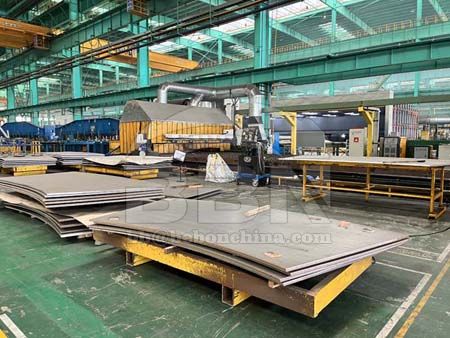
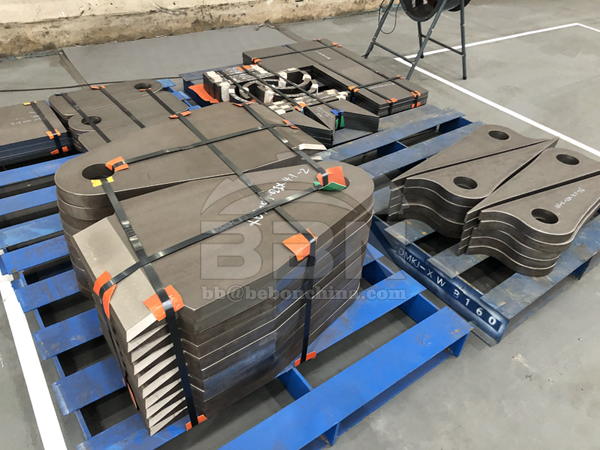
The core of flame cutting S355J2+N steel plates lies in the precise coordination of gas, speed, and cutting nozzle. Oxygen purity must be ≥99.5%; for every 0.5% decrease in purity, the cutting speed needs to be reduced by 10%, otherwise slag buildup and surface deterioration will occur. Cutting speed is related to plate thickness; for example, a 30mm steel plate requires a slow speed combined with a crescent-shaped oscillation for slag removal. The nozzle height should maintain the flame tip 1.5-3mm from the surface to avoid carbon enrichment.
In terms of operating techniques, preheating to a bright red color is required before cutting. After turning on the oxygen, cutting begins as soon as the iron slag splashes. For straight cuts, the cutting torch should be tilted 20°-30° backward, while for curved cuts, it should be perpendicular to the surface. Thick S355J2+N plates (>25mm) require a larger nozzle, a strong flame, and a slow speed combined with oscillation. During tempering, turn off the acetylene first, then the oxygen, clean the nozzle, and then restart.
Safety and quality cannot be ignored. Before cutting, remove oil and rust, and elevate the workpiece to leave a gap. Check that the flame is straight and clear; otherwise, clean it with a cleaning needle. After cutting, remove the slag and check the quality of the cut surface. Oxygen purity, speed, and nozzle height are key factors affecting quality.
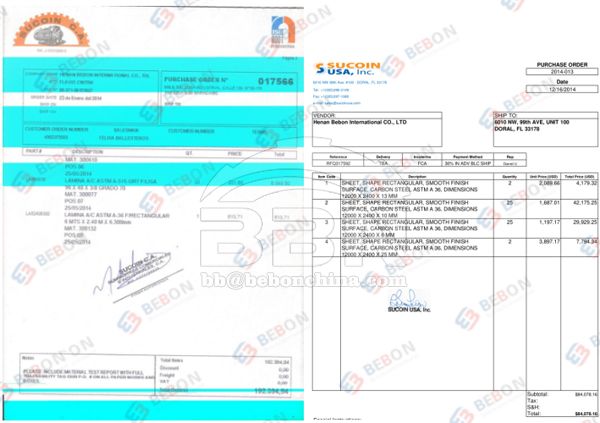
Just like you, 70% customers choose long-term cooperation with BBN steel not only for our good product and service quality, good reputation in the international market, but also for our experienced one-stop raw material supply and further steel processing!
Henan BEBON Iron&Steel co.,ltd.
 Language

 Online Consultation


